The Commodity Reform Program was part of a $100 million strategic reform initiative introduced to simplify, deliver cheaper, faster and reduce total cost of ownership for Defence commodities.
Our team were embedded to represent Defence as a trusted partner and provide key inputs to the business case and critical evaluation of technology solutions.
Toll Logistics were secured as the key industry partner to develop and deliver Australia’s first Fourth Party Logistics (4PL) solution.
As an integrated development team, the program provided Defence with a partnership capability which transitioned into a 4PL service and provided continuous improvement initiatives for people, process, data and technology.
The experience between Toll and our team facilitated the success of this partnership by:
- Creating open forums built on trust to explore ideas, drivers and required outcomes for performance reviews and management frameworks.
- Ensuring each business division delegated a leader representative to ‘be the face’ of the change. This enabled the change program to test communications and engagement before releasing to the field.
- Stakeholder engagement representatives from Toll, our team, Army, Airforce & Navy, to enable change programs success.
Results
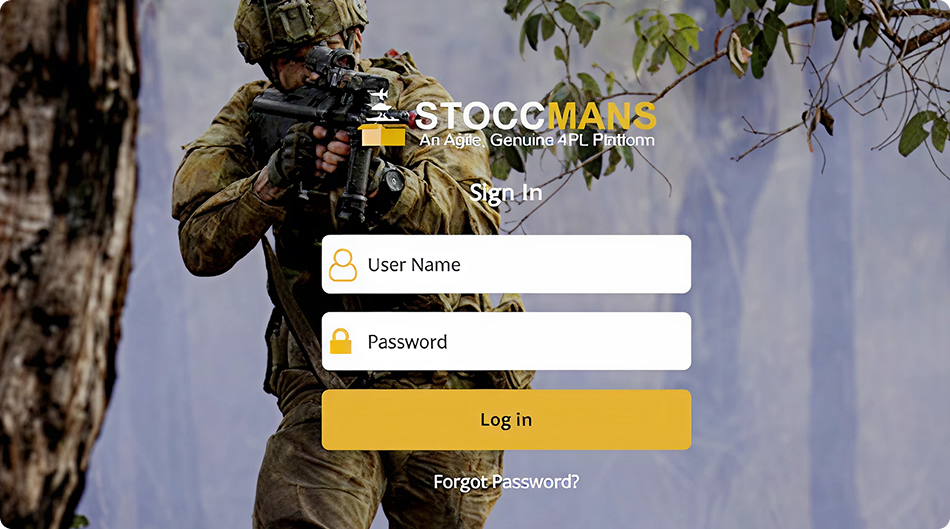
Our team introduced a new interactive shopping cart platform, providing users for the first time, an online capability to view and select products, place and track orders.
Our trusted partnership resulted in:
- Phase 1 – Program initiation in design and planning
- Phase 2 – Program mobilisation to setup infrastructure, systems, processes, and teams
- Phase 3 – Transition 4PL to support sustainment
- Phase 4 – Continuous improvement and innovation with initiatives and benefits realisation for future enhancements
Our solution delivered a modern and scalable platform, providing a Defence-specific catalogue of funded and compliant products supplied by a network of approved suppliers.
On average, commodity prices were delivered 60% faster than supplied through the Defence stores or existing supply chain procurement processes.